A Michigan Court of Appeals decision could have expensive consequences for landlords who ignore local rental ordinances.
Imagine renting out your property, collecting rent, and later discovering that your lease was never legally enforceable. Worse yet, your former tenant might be able to recover some of the rent already paid!
That’s the situation addressed by the Michigan Court of Appeals in Skidmore v. Hayashi, a published decision issued October 21, 2026.
The owners rented a condominium in West Bloomfield Township without obtaining the rental certificate of compliance required by local ordinance. When a dispute arose between the landlords and tenant, the lack of certification became a major legal issue.
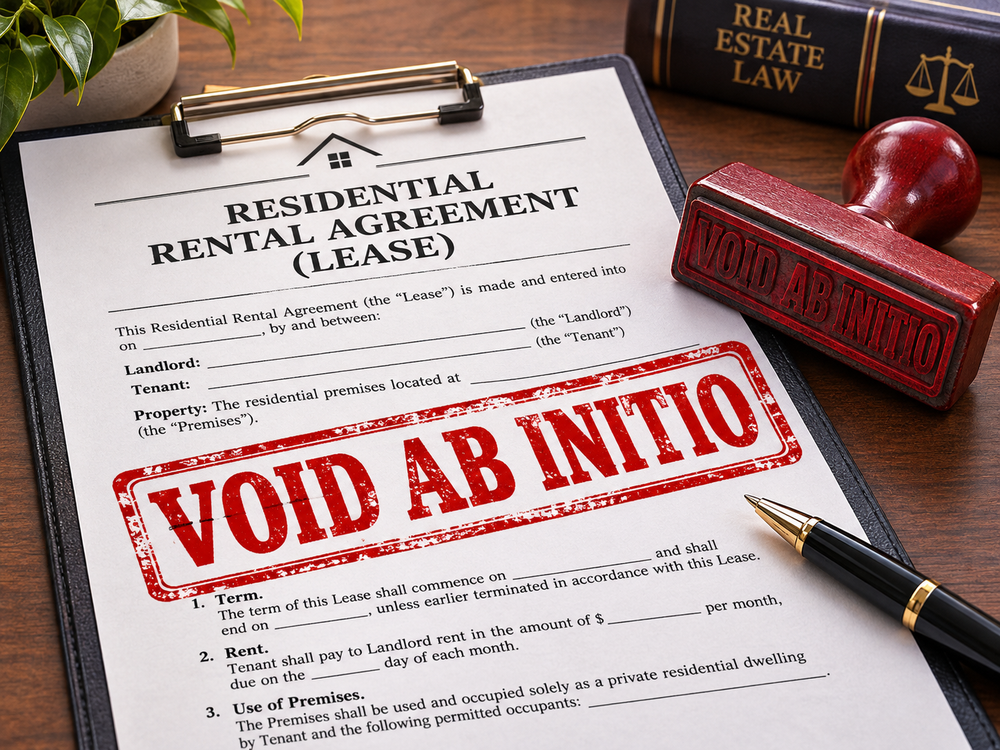
The Court of Appeals ruled that the lease was void ab initio—a Latin term meaning void from the beginning.
Why? Because the local ordinance prohibited renting or occupying the property without the required certificate. The lease was therefore based on an activity prohibited by law.
Here’s where things get interesting.
The landlords could not enforce the lease to recover unpaid rent. But the tenant couldn’t sue for breach of the lease either, because there was no enforceable contract.
The court also reinstated the tenant’s claims for unjust enrichment and disgorgement, allowing him to pursue recovery of money previously paid.
Does that mean the tenant gets all his rent back?
Not necessarily. The Court of Appeals did not award a refund. It sent those claims back to the trial court for further proceedings.
The Lesson for Landlords and Property Managers
Before renting residential property, determine whether your municipality requires rental registration, inspections, or a certificate of compliance.
The consequences of ignoring those requirements may extend far beyond a municipal fine. Depending on the ordinance and circumstances, the lease itself could be unenforceable.
And that’s a rather expensive way to learn a little Latin!
Case reference: Skidmore v. Hayashi, Michigan Court of Appeals, Docket Nos. 371345 and 371349, October 21, 2026 (published).
Read the Michigan Court of Appeals opinion
The Acme Institute — Home of Dynamite Education